Vehicle Nano Glass Protection Care Guide
Automotive glass is typically exposed to road film, dust, and contaminants from the environment. While the same core cleaning principles apply to cleaning all NanoGlass Protection™ treated glass surfaces, the smaller surface area allows for more control using a microfiber-based approach.
Watch: How to Easily Clean Automotive Glass
NanoGlass Protection™ vehicle glass cleaning guide — simple microfiber method to keep coated glass clean, clear, and performing properly.
Step by Step Care Instructions
🔵What You Will Need
Clean microfiber cloth
GlassLab™ Drying Towel (or similar high-quality drying towel)
Clean water (bottle or small container for pouring)
⚠️Why We Don’t Use a Bucket
In the video, you’ll see water being applied directly to the glass or cloth, rather than using a bucket.
This is because once a cloth has picked up contamination, placing it into a bucket will transfer that contamination into the water — and then back onto the glass.
By applying fresh water directly, you’re always working with clean water on the surface.
🔵Step 1 : Prepare Your Microfibre Cloth
Fold your microfiber cloth in half, then fold it in half again.
This creates multiple clean sections of cloth that you can rotate between as you work.
👉 As one section becomes dirty, simply refold the cloth to expose a clean side.
WHY THIS WORKS : This helps prevent spreading contamination back onto the glass and keeps your cleaning consistent.
🔵Step 2: Fully Wet the Cloth and Begin Cleaning
Thoroughly wet your microfiber cloth using clean water.
👉 The cloth should be fully saturated and dripping, not just damp.
Begin wiping the glass using:
Left to right, then right to left passes
Work your way down the glass in sections
Keep your passes straight and overlapping
After each full pass:
Check the cloth for contamination
If dirt or residue is visible, refold to a clean section before continuing
IMPORTANT : A fully wet cloth helps lift contamination into solution, rather than dragging it across the surface.
This process should be carried out when the glass is cool and out of direct sunlight. If the glass is hot, water can evaporate too quickly, which may leave behind or “bake on” any remaining dirt or road film.
🔵Step 3: Final Clean and Dry
Repeat Step 2 until you no longer see any contamination appearing on the microfiber cloth.
IMPORTANT : At this stage, the glass should only have clean water on it. The drying towel then removes that water and lightly buffs the surface, bringing out the full clarity and finish.
Once the cloth is no longer picking up dirt:
Refold to a clean, unused section of the microfiber
Fully wet it again with clean water
Wipe the glass one final time to ensure only clean water remains on the surface.
Then:
Use your GlassLab™ Drying Towel to remove the water from the glass
Wipe in smooth, controlled passes to achieve a clear, streak-free finish
Additional Care Notes (Automotive Glass)
🔵Edges and Seals
The edges and seals around automotive glass can hold a significant amount of road grime.
If needed before cleaning the glass:
Use a separate, wet microfiber cloth
Thoroughly wipe around the edges and seals
👉 This helps prevent contamination from being pulled back onto the glass during the drying stage.
If dirt remains around the edges, it can transfer onto your drying towel and be spread across the glass.
⚠️ Inspect Your Cloths Before Use
While microfiber cloths and drying towels are safe for glass, they can trap debris that may cause scratches.
Before use:
Check for any trapped particles (e.g. grit, small stones)
If the cloth has been dropped on the ground, inspect it carefully
👉 If in doubt, set it aside and use a clean cloth.
🔵Managing Dirty Cloths During Cleaning
As you clean, your microfiber cloth will collect contamination.
If you run out of clean sections:
Rinse the cloth under running water
Rub the cloth against itself to release trapped dirt
Wring out and continue using
👉 Warm water can help clean the cloth more effectively.
🔵Avoid Heat During Cleaning
Do not clean glass in direct sunlight or if the glass is hot.
👉 Heat causes water to evaporate too quickly, which can leave behind or “bake on” contamination.
⚠️ Clean Your Wiper Blades Regularly
As demonstrated in the video, your wiper blades should be cleaned regularly.
Wiper blades are one of the main contributors to fine scratching on automotive glass, especially when contaminated with road film and grit.
Use a damp microfiber cloth to wipe along the rubber blade
Remove any built-up dirt or residue before using the wipers
👉 Contamination on the blade can act like a fine abrasive slurry when combined with water, gradually marking the glass over time.
While NanoGlass Protection™ helps reduce this effect, maintaining clean wiper blades is important for preserving the clarity and condition of your glass.
🔵 Side Window Care
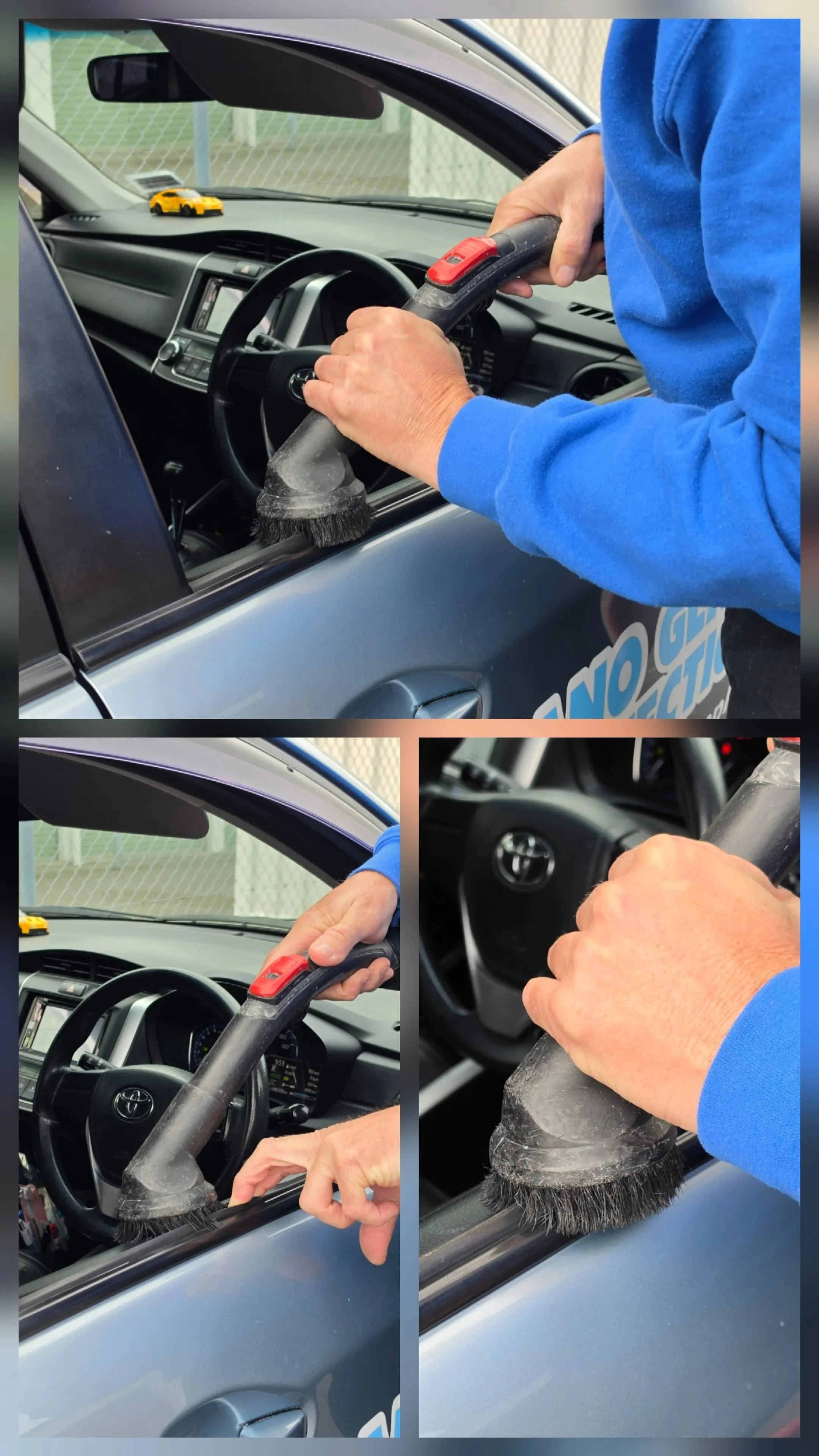
⚠️ Keep Window Seals Clean
Although side windows don’t have wiper blades, they are still susceptible to scratching.
This is because the sweeper seals (the rubber seals the glass moves through) can trap dirt, dust, and road grit.
Wind the window fully down
Use a vacuum with a brush attachment to clean along the seals
Remove any built-up debris before operating the window
👉 As the window moves up and down, trapped contamination can be dragged across the glass, causing fine scratches over time.